
Blog
How to Make Money Reselling Liquidation Pallet Items

How to Make Money Reselling Liquidation Pallet Items
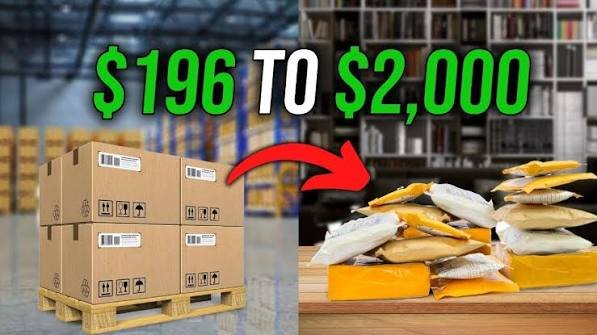
Reselling liquidation merchandise can be an interesting way to start or expand a resale business. Liquidation pallets allow buyers to purchase inventory in bulk, often at prices below traditional retail.
However, buying a pallet doesn’t automatically mean you’ll make a profit. Successful reselling requires research, careful purchasing, accurate pricing, good organization, and an understanding of what customers want.
In this guide, we’ll cover how to make money reselling liquidation pallet items and practical steps you can use to build a more effective resale strategy.
What Is Liquidation Pallet Reselling?
Liquidation pallet reselling involves purchasing bulk merchandise from a liquidation supplier and selling individual items to customers for a higher price.
Liquidation inventory can come from sources such as:
Customer returns
Overstock
Shelf pulls
Store closeouts
Excess inventory
Discontinued products
The merchandise may include electronics, tools, home goods, apparel, toys, appliances, furniture, and many other categories.
The condition of the products can vary, so understanding the inventory before purchasing is an important part of the process.
1. Start With a Realistic Budget
Before purchasing your first liquidation pallet, determine how much you’re comfortable investing.
Don’t use your entire available budget on inventory. You’ll likely need money for other expenses, including:
Packaging materials
Storage
Marketplace fees
Cleaning supplies
Repairs
Advertising
Business expenses
A realistic budget helps you avoid purchasing more inventory than you can effectively manage.
2. Choose Products You Know
Product knowledge can give you an advantage when buying liquidation inventory.
If you understand a particular category, you’ll have an easier time recognizing brands, identifying valuable products, estimating resale prices, and spotting potential issues.
As a beginner, consider starting with categories you’re already familiar with rather than buying completely random inventory.
3. Research Before You Buy
Don’t purchase a liquidation pallet based solely on its advertised retail value.
Research the products and check current selling prices on the marketplaces where you plan to sell.
Pay attention to:
Current asking prices
Completed sales
Product condition
Brand popularity
Customer demand
Competition
Actual selling prices are generally more useful than original retail prices when estimating potential revenue.
4. Understand Your Cost Per Item
One of the most important parts of liquidation reselling is knowing your true cost.
For example, if you purchase a pallet for $1,000 and it contains 100 potentially sellable items, your basic inventory cost averages $10 per item.
But your real cost may be higher after considering shipping, storage, marketplace fees, packaging, repairs, and other expenses.
Understanding these numbers helps you price your products more effectively.
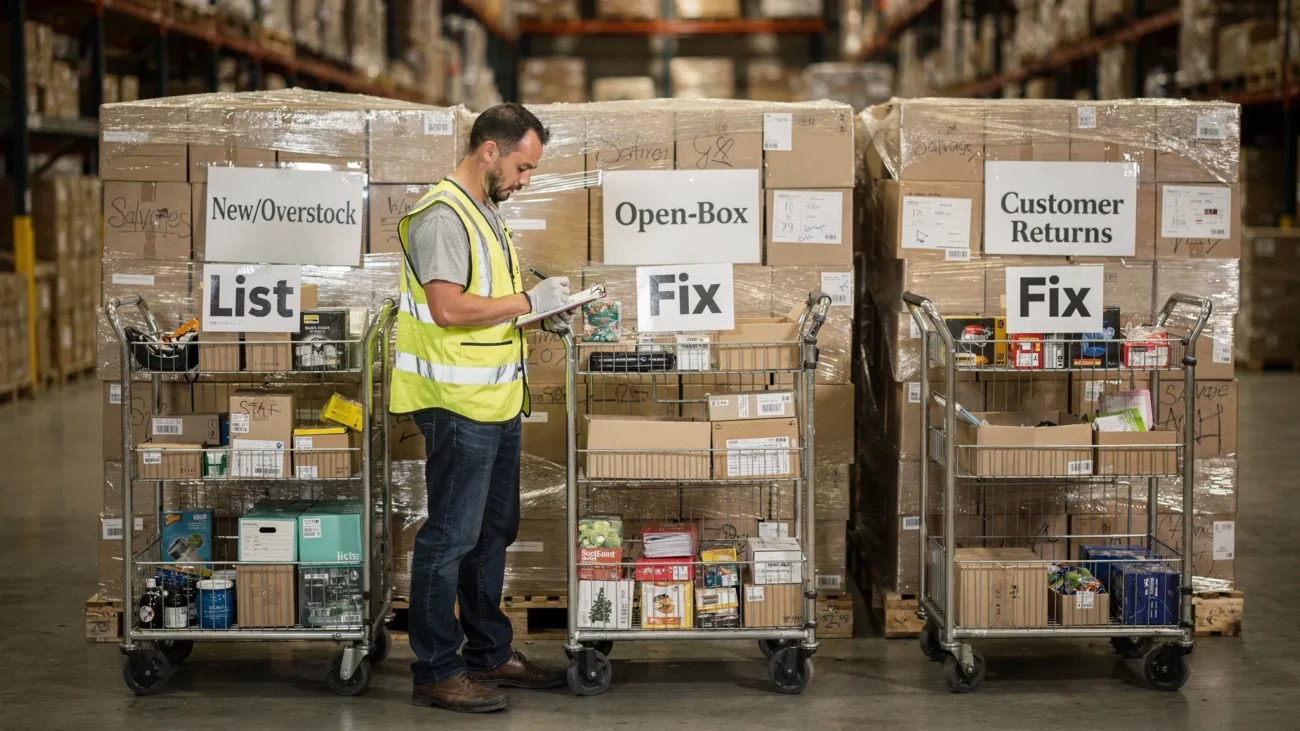
5. Inspect and Organize Your Inventory
Once your pallet arrives, take time to sort everything.
Separate merchandise into categories such as:
Ready to sell
Needs cleaning
Needs testing
Needs minor repairs
Missing parts
Not suitable for resale
Testing products when appropriate can also help you avoid listing merchandise with problems that could lead to customer complaints or returns.
6. Take High-Quality Product Photos
Good photos can make a major difference when selling online.
Use clear, well-lit photographs that accurately show the product. Include multiple angles and photograph any scratches, damage, missing components, or other imperfections.
Being transparent about product condition can help customers make informed purchasing decisions.
7. Write Accurate Product Descriptions
Your product description should clearly explain what you’re selling.
Include relevant information such as:
Brand
Model
Size
Color
Condition
Included accessories
Known defects
Important product features
Avoid exaggerating the condition or making claims you can’t verify.
Accurate listings can help build customer trust and reduce avoidable returns.
8. Sell on Multiple Channels
You don’t have to rely on just one sales channel.
Depending on your products, you could sell through:
Online marketplaces
Your own ecommerce website
Social media
Local marketplaces
Flea markets
Pop-up events
Consignment opportunities
Different products may perform better on different platforms, so experimenting can help you discover where your inventory sells most effectively.
9. Price for Profit, Not Just Sales
Getting an item sold is only part of the equation.
Your selling price needs to account for your costs and desired margin.
A simple calculation is:
Selling Price − Total Cost = Gross Profit
For example, if your total cost for an item is $15 and you sell it for $30, your gross profit before other applicable expenses is $15.
Keep in mind that marketplace fees, shipping, taxes, refunds, and other expenses can reduce the amount you actually keep.
10. Move Inventory Efficiently
Holding inventory for too long ties up your money and storage space.
If an item isn’t selling, consider whether the price needs to change or whether another sales channel might be better.
Some resellers use different strategies depending on how long an item has been listed:
New listing: Start with a competitive market price.
After several weeks: Consider adjusting the price.
Slow-moving inventory: Try another marketplace or sales channel.
Remaining inventory: Consider bundling items or offering a clearance price.
The goal is to keep your inventory moving while protecting your margins when possible.
11. Keep Track of Every Dollar
Successful reselling requires good recordkeeping.
Track each pallet’s:
Purchase cost
Number of items
Selling prices
Platform fees
Shipping expenses
Repair costs
Packaging expenses
Total revenue
Unsold inventory
This information can help you determine which pallets and product categories are generating the best results for your business.
Common Mistakes Liquidation Resellers Should Avoid
Assuming Every Item Is Profitable
Not every item in a pallet will be a winner. Some products may require repairs, have limited demand, or be difficult to sell.
Ignoring Product Condition
Never assume that liquidation merchandise is new. Always understand whether you’re purchasing new, open-box, used, or customer-return inventory.
Overpaying for a Pallet
A pallet with a high estimated retail value isn’t necessarily worth its asking price. Compare the purchase price with realistic resale values.
Buying More Inventory Than You Can Handle
Large amounts of inventory require storage, time, and money. Make sure your operation can handle the volume you’re purchasing.
Forgetting Selling Fees
Marketplace fees can significantly affect your final profit. Include them when calculating your selling prices.
Where to Buy Liquidation Pallets
Choosing a reliable liquidation supplier is an important part of building a resale business.
Look for suppliers that provide clear information about their merchandise, product conditions, purchasing terms, shipping policies, and return policies.
At Pallet Plaza Liquidation, we offer liquidation merchandise that may include customer returns, overstock, shelf pulls, closeouts, and other inventory.
Our available inventory changes regularly, giving resellers opportunities to discover different products and categories.
Frequently Asked Questions
Can you really make money reselling liquidation pallets?
Yes, liquidation pallets can provide an opportunity to generate revenue through resale. However, profits aren’t guaranteed. Results depend on factors such as purchase price, product condition, demand, selling prices, fees, and operating expenses.
What should I sell from liquidation pallets?
The best products for you will depend on your knowledge, customers, sales channels, and current market demand. Start by researching products you understand well.
How much money do I need to start reselling liquidation pallets?
There is no single amount required. Some resellers start with a single pallet and gradually increase their inventory as they gain experience.
Where can I resell liquidation products?
You can sell through online marketplaces, your own website, social media, local marketplaces, flea markets, and other sales channels.
How do I calculate profit on liquidation items?
Subtract your total costs from your selling revenue. Make sure your calculation includes the pallet cost and other applicable expenses such as shipping, marketplace fees, packaging, repairs, and storage.
Final Thoughts
Making money reselling liquidation pallet items starts with buying wisely and selling strategically.
Research your inventory, understand product conditions, calculate your real costs, create accurate listings, price competitively, and keep track of your results.
Most importantly, treat liquidation reselling like a business. The more you learn about your customers, products, and costs, the better prepared you’ll be to make informed purchasing decisions.
Looking for your next inventory opportunity? Explore liquidation pallets and merchandise from Pallet Plaza Liquidation.